




.svg)


The top 10 marketing automation platforms in 2025
1. HubSpot Marketing Hub
Best for: Mid-market businesses seeking an all-in-one CRM + marketing solution
Pros: Excellent UI, powerful automation templates, lead scoring, native CRM
Cons: Pricing scales quickly; limited flexibility in lower tiers
Pricing: Free tier available; paid plans from $50/month
HubSpot continues to dominate the mid-market with its intuitive interface and deep native integrations. It’s ideal for teams that want marketing, CRM, and sales automation under one roof.
2. ActiveCampaign
Best for: SMBs that need powerful email automation with CRM-lite features
Pros: Affordable, flexible journey builder, great segmentation tools
Cons: UI can feel cluttered; analytics are limited at lower tiers
Pricing: Starts at $29/month
ActiveCampaign offers advanced automation logic with a user-friendly editor, making it a top choice for growing businesses focused on personalized communication.
3. Klaviyo
Best for: E-commerce brands using Shopify or BigCommerce
Pros: Built-in email + SMS, robust segmentation, predictive analytics
Cons: Less suited for B2B; workflows are more product-focused
Pricing: Free up to 250 contacts; paid plans start from $20/month
Klaviyo excels in data-driven e-commerce marketing, especially when paired with platforms like Shopify, allowing real-time behavioral targeting.
4. Salesforce Marketing Cloud
Best for: Large enterprises with complex cross-channel campaigns
Pros: AI-driven personalization, enterprise-grade automation, CRM-native
Cons: High cost, steep learning curve, long implementation
Pricing: Custom pricing; enterprise tier typically $1,000+/month
Built for scale, Salesforce Marketing Cloud offers advanced capabilities for teams managing global campaigns across multiple channels and segments.
5. Brevo (formerly Sendinblue)
Best for: SMBs and startups needing value for money
Pros: Email, SMS, built-in CRM, strong deliverability
Cons: Limited enterprise features; fewer integrations
Pricing: Free plan; paid plans from $25/month
Brevo is perfect for small businesses looking for a budget-friendly platform that still delivers core automation, especially for email and SMS.
6. Marketo Engage (Adobe)
Best for: B2B enterprises focused on lead nurturing and ABM
Pros: Advanced lead scoring, CRM integrations, multi-touch attribution
Cons: Steep learning curve; legacy UI
Pricing: Custom (usually $1,000+/month)
As part of Adobe Experience Cloud, Marketo remains a go-to for B2B marketers who need scalable lead management and enterprise integrations.
7. Mailchimp
Best for: Startups and small businesses launching campaigns quickly
Pros: Easy to use, templates, built-in forms and landing pages
Cons: Limited automation depth; pricing rises with contact volume
Pricing: Free for basics; paid from $13/month
Mailchimp is the friendly face of email marketing, ideal for teams that want to get started fast without needing complex logic or CRM features.
8. Ortto
Best for: SaaS and data-driven startups
Pros: Journey builder, customer data platform (CDP) features, dashboards
Cons: Smaller ecosystem, still gaining traction
Pricing: Free plan; paid from $29/month
Ortto combines automation with strong visual analytics, giving startups clear insights into what’s working across the funnel.
9. Customer.io
Best for: Product-led businesses with technical resources
Pros: API-first, event-based automation, developer flexibility
Cons: Steep for non-technical teams; limited visual tools
Pricing: Starts at $100/month
Customer.io shines in environments where product behavior drives engagement, perfect for apps and platforms with in-house development teams.
10. Pardot (Salesforce)
Best for: B2B businesses already using Salesforce CRM
Pros: Seamless CRM sync, lead grading, B2B campaign flows
Cons: Legacy UX, expensive entry point
Pricing: Starting at $1,250/month
Now rebranded as Marketing Cloud Account Engagement, Pardot is Salesforce’s B2B powerhouse, offering robust lead management for large sales teams.
Quick decision guide: What’s right for your business?
Choosing the right marketing automation platform depends heavily on your business type and priorities.
For startups and small businesses
If you're just getting started with marketing automation, ease of use and affordability are key. Platforms like Mailchimp, Brevo, and Klaviyo offer intuitive interfaces, solid automation features, and flexible pricing, making them ideal for lean teams that need to move fast without complexity.
For e-commerce companies
E-commerce businesses thrive on personalized, real-time communication. Klaviyo stands out with deep Shopify and BigCommerce integrations, while ActiveCampaign offers flexible automations and strong email/SMS capabilities, helping merchants convert and retain customers with precision.
For B2B mid-market organizations
Mid-sized B2B businesses need platforms that support lead nurturing, scoring, and CRM integration. HubSpot delivers a powerful all-in-one experience, while Marketo (Adobe) is built for companies focused on account-based marketing and complex buyer journeys.
For large enterprises
Enterprises require scalability, security, and cross-channel orchestration. Salesforce Marketing Cloud and Pardot are top choices for companies that already use Salesforce CRM and want enterprise-grade personalization, analytics, and campaign management.
For SaaS and product-led companies
If you're a tech-driven or product-led business, look for tools that support event-based triggers, flexible APIs, and real-time data flows. Ortto and Customer.io cater to this need, offering advanced automation logic and seamless integration with product analytics and engineering workflows.
Why integration matters more than features
Even the best marketing automation tools can underdeliver if they’re stuck in a silo. Common integration challenges include incomplete customer data due to disconnected systems, manual CSV exports between platforms like CRM and ERP, and delayed campaign triggers due to batch-based syncs.
To unlock true marketing performance, your automation tool must be tightly integrated with the rest of your stack, CRM, ERP, e-commerce, CDP, support systems, and beyond. The key to this integration? The Alumio integration platform.
Alumio: Unifying your marketing automation stack
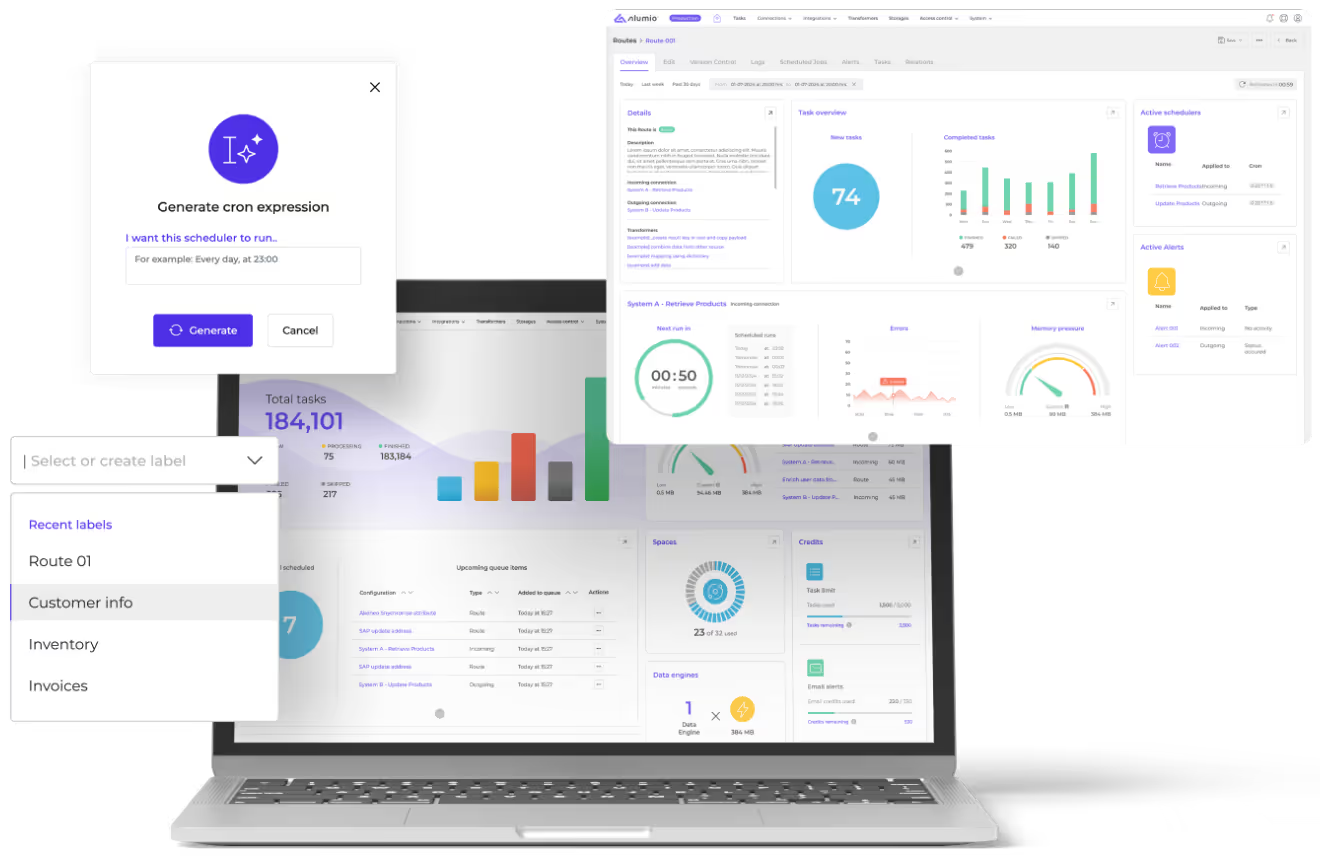
Alumio is a low-code iPaaS built to help businesses connect their marketing platforms to the rest of their digital ecosystem without writing custom scripts or managing brittle APIs. Regardless of what marketing automation platform you are using, Alumio ensures seamless communication between your marketing tool and your CRM, ERP, or e-commerce platform.
With Alumio, you can:
- Sync leads, contacts, and campaign data in real time
- Build a unified customer profile across platforms
- Use prebuilt connectors to reduce implementation time
- Set up and monitor integrations without developer help
Learn more about Alumio and how it works →
Tools are only half the story
Choosing the right marketing automation platform in 2025 is a key decision; but it’s only half the journey. The real value comes when your platform works as part of a connected, agile ecosystem. Alumio helps you get there by ensuring your automation tool is fully integrated, future-proof, and ready to scale with your business. Ready yo unify your marketing stack? Book a demo with our team






.svg)
.svg)
.svg)
.svg)
.svg)
.svg)
