


A Alumio vivid purple arrow pointing to the right, a visual representation of how to access more page material when clicking on it.
Go back

What is Microsoft Dynamics 365?

By
Published on
July 21, 2023
Updated on
June 24, 2026
IN CONVERSATION WITH
Email icon
Email icon

Designed to streamline and optimize various business processes, Microsoft Dynamics 365 is a portfolio of ERP and CRM cloud-based business applications for both SMBs and large enterprises. From improving supply chain management and enhancing sales processes, to enabling marketing efforts, and much more, Dynamics 365 delivers tailored solutions for all kinds of business use cases.

What is Microsoft Dynamics 365?

Microsoft Dynamics 365 is an integrated product line of leading ERP (Enterprise Resource Planning) and CRM (Customer Relationship Management) cloud-based applications. Designed to help businesses manage and improve operational efficiency and enhance customer experiences, huge names in the industry like Coca-Cola and H&M are known users of Microsoft Dynamics 365 applications. It also integrates with other Microsoft products such as Office 365, Power BI, and Azure, helping businesses implement integrated applications as they grow in a scalable way.

What does the name Microsoft Dynamics 365 mean?

The name "365" in Microsoft Dynamics 365 signifies the 24/7 availability and accessibility of its suite of business apps throughout the year. As a cloud-based platform this also means that it operates online and is accessible from anywhere, at any time. It could also stand for how the suite of appliations provides a solution to help manage all kinds of everyday business operations.

What kind of business apps does Dynamics 365 include?

First launched by Microsoft in 2016, Microsoft Dynamics 365 was introduced as a cloud-based platform. It combined Microsoft Dynamics CRM and Microsoft’s ERP solutions, presenting them as a suite of dedicated business Dynamics 365 apps or modules to manage various business processes, such as - sales, marketing, finance, supply chain management, field service, customer service, and human resources. The applications in the Dynamics 365 suite that caters to each of these businesses processes include:

1. Dynamics 365 Sales

This app empowers sales teams with tools to manage leads and customer interactions effectively. It also provides valuable insights and automation features to empower data-driven decision-making capabilities.

2. Dynamics 365 Marketing

Helping leverage customer data and behavioral insights, this app enables targeted, personalized marketing campaigns that are more likely to resonate with the audience and drive better engagement.

3. Dynamics 365 Customer Service

Designed to empower customer service, this application enables organizations to manage customer inquiries, support tickets, and service requests efficiently, leading to improved customer satisfaction.

4. Dynamics 365 Field Service

For businesses that provide on-site services, this application is a game-changer. It optimizes field operations by efficiently scheduling appointments, managing resources, and tracking service delivery.

5. Dynamics 365 Human Resources

This Dynamics 365 application aids in recruiting, employee onboarding, performance management, and much more, enabling the kind of talent management that’s crucial for business success.

6. Dynamics 365 Finance

Managing financial processes is made simpler with this application. It offers robust financial reporting, budgeting, and forecasting capabilities, enabling well-informed financial decisions.

7. Dynamics 365 Supply Chain Management

This Dynamics 365 application helps efficiently manage the supply chain. It provides end-to-end visibility, helping organizations streamline logistics, inventory, and production processes.

Businesses can choose to implement each of these Dynamics 365 applications standalone to manage each of these departments respectively. Or, they can also avail the entire Dynamics 365 suite as a complete end-to-end solution.


Turn AI ambition into action

Portrait of Leonie Becher Merli, Business Development Manager at Alumio

Get a free assessment of your integration needs and next steps

Portrait of Leonie Becher Merli, Business Development Manager at Alumio

What are the benefits of using Microsoft Dynamics 365 apps?

Apart from providing a holistic collection of modules that help manage a wide variety of business operations, opting for Microsoft Dynamics 365 apps results in essential benefits such as:

1. Ready-to-use modular apps

Since the Microsoft Dynamics 365 suite of apps is modular, it allows businesses to choose and implement only the tools they need, reducing complexity, and ensuring a tailored usage of apps.

2. Faster time-to-market

By delivering pre-built applications that are ready to use right out-of-the-box, Dynamics 365 helps rapidly deploy a module to extend business capabilities in an integrated manner.

3. Data-driven insights

Dynamics 365 helps leverage and analyze real-time data across all operations with built-in AO and advanced analytics, delivering critical insights and enable informed decision-making.

4. Unified cloud experience

Dynamics 365 operates seamlessly within the Microsoft cloud, which provides businesses with a unified, secure, and scalable infrastructure to innovate faster, collaborate remotely, and respond faster to market demands.

Integrating Microsoft Dynamics 365 Finance & Supply Chain Management

In recent years, Microsoft combined the capabilities of Dynamics 365 Finance and Dynamics 365 Supply Chain Management into a single, integrated ERP solution called - Microsoft Dynamics 365 Finance and Supply Chain Management (F&SCM), more popularly known as - Dynamics 365 Finance & Operations. It provides an all-in-one solution that delivers tools to manage finance processes, supply chain operations, manufacturing, warehouses, business intelligence, and much more.

However, while Microsoft Dynamics 365 F&SCM  natrally integrate internally with other Microsoft products like Power BI, Microsoft Office 365, Azure, and Dynamics 365 CRM, it is more challenging to integrate it with third-party applications like e-commerce platforms, PIM systems, other CRM systems, marketing automation apps, and more. Modern businesses are now discovering middleware solutions like the iPaaS (integration Platform as a Service) that provide special Connectors that significantly simply integrations between complex EPR appliations like Dynamics 365 F&SCM (aka Dynamics 365 Finance & Operations) and the aforementioned third-party apps and SaaS solutions.

Want to learn how Drake & Farrell, a leading circular supply chain solution provider, used Alumio ERP API Plugin to integrate their Dynamics 365 F&O ERP with multiple customer e-commerce platforms like Adobe Commerce, Shopify, and WooCommerce? Read the full case study ->

In conclusion

Microsoft Dynamics 365 is a powerful suite of applications that can revolutionize the way your business operates. By harnessing the integration of CRM and ERP functionalities, you can streamline processes, enhance customer experiences, and drive growth. As technology continues to advance, embracing solutions like Microsoft Dynamics 365 becomes imperative for staying competitive in today's fast-paced business landscape.

No items found.
Topics in this blog:
No items found.

FAQ

Integration Platform-ipaas-slider-right
What is Microsoft Dynamics 365 and what does it offer?

Microsoft Dynamics 365 is a cloud-based portfolio of enterprise business applications combining ERP (Enterprise Resource Planning) and CRM (Customer Relationship Management) capabilities in an integrated suite. It includes applications for: Finance and Operations (financial management, supply chain, manufacturing), Business Central (mid-market ERP for SMBs), Sales and Customer Service (CRM), Marketing (B2B and B2C marketing automation), Commerce (e-commerce and retail), and Field Service (service operations). Its strength is deep integration with the Microsoft 365 productivity suite, Teams, Azure, and Power Platform, making it the natural choice for organizations already invested in the Microsoft ecosystem.

Integration Platform-ipaas-slider-right
How does Dynamics 365 compare to SAP as an ERP?

Dynamics 365 and SAP are the two dominant enterprise ERP vendors, but they target different profiles: SAP S/4HANA is strongest for large enterprises with complex manufacturing, supply chain, and financial requirements; Dynamics 365 Finance and Operations is strongest for mid-market to large enterprises, particularly those in the Microsoft ecosystem, with strong retail, wholesale, and service industry verticals. Dynamics 365 Business Central serves the mid-market with a more accessible price point and faster implementation timeline than SAP. For integration purposes, Dynamics 365's OData REST APIs are more accessible than SAP's legacy BAPI and IDoc interfaces, though both require dedicated connectors in an integration platform.

Integration Platform-ipaas-slider-right
How does Alumio integrate Dynamics 365 with e-commerce and other systems?

Alumio integrates Dynamics 365 with e-commerce and other systems through dedicated connector templates for both Dynamics 365 Finance and Operations and Dynamics 365 Business Central. These connectors handle OData API authentication and entity resolution, so integration teams configure the data mapping between Dynamics 365 entities (sales orders, inventory journals, customer records, product records) and the connected system's format (Shopify orders, Akeneo product attributes, Salesforce contact records) in Alumio's Transformer components. When Microsoft updates Dynamics 365's API, the Alumio connectors are updated at the platform level rather than requiring individual integration project maintenance.

Integration Platform-ipaas-slider-right
What are the most common Dynamics 365 integration use cases?

The most common Dynamics 365 integration use cases are: Dynamics to e-commerce (order processing, inventory synchronization, pricing management), Dynamics to PIM (product master data providing the foundation for content enrichment), Dynamics CRM to marketing automation (contact data and lifecycle events flowing to Klaviyo, HubSpot, or Marketo), Dynamics to marketplace connectors (product catalog and order flows for Amazon, Bol.com), Dynamics to WMS or 3PL (fulfillment order routing and goods receipt confirmation), and Dynamics to Power BI (operational reporting data flowing to business intelligence dashboards). Each use case has corresponding Alumio connector templates that serve as the starting point for configuration.

Integration Platform-ipaas-slider-right
What are the advantages of Dynamics 365's cloud-native architecture for integration?

Dynamics 365's cloud-native architecture provides integration advantages including: standard REST/OData APIs (more straightforward to connect to than SAP's legacy BAPI interfaces), regular API updates aligned with the cloud release cycle (rather than requiring on-premise upgrade projects), native integration with Microsoft's Azure Logic Apps and Power Automate for simple automation scenarios, and Microsoft's own integration tools that an iPaaS can supplement or replace for complex scenarios. For organizations choosing between cloud ERPs, Dynamics 365's modern API architecture is a meaningful integration consideration alongside functional capabilities and total cost of ownership.

Integration Platform-ipaas-slider-right
How should businesses approaching a Dynamics 365 implementation plan their integration architecture?

Organizations implementing Dynamics 365 should plan integration architecture in parallel with the ERP implementation rather than as a subsequent project. This means: scoping which systems must integrate with Dynamics 365 before the ERP go-live date (typically e-commerce, WMS, and PIM are the highest-priority connections), selecting an integration platform early enough for connectors to be built and tested alongside the ERP implementation, establishing data ownership decisions (which system is master for products, customers, and pricing) before building integration Routes, and ensuring integration testing is included in the ERP implementation's UAT scope. Integration projects treated as afterthoughts to ERP implementations consistently produce the most avoidable post-go-live data quality issues.

Get a free assessment of your integration needs

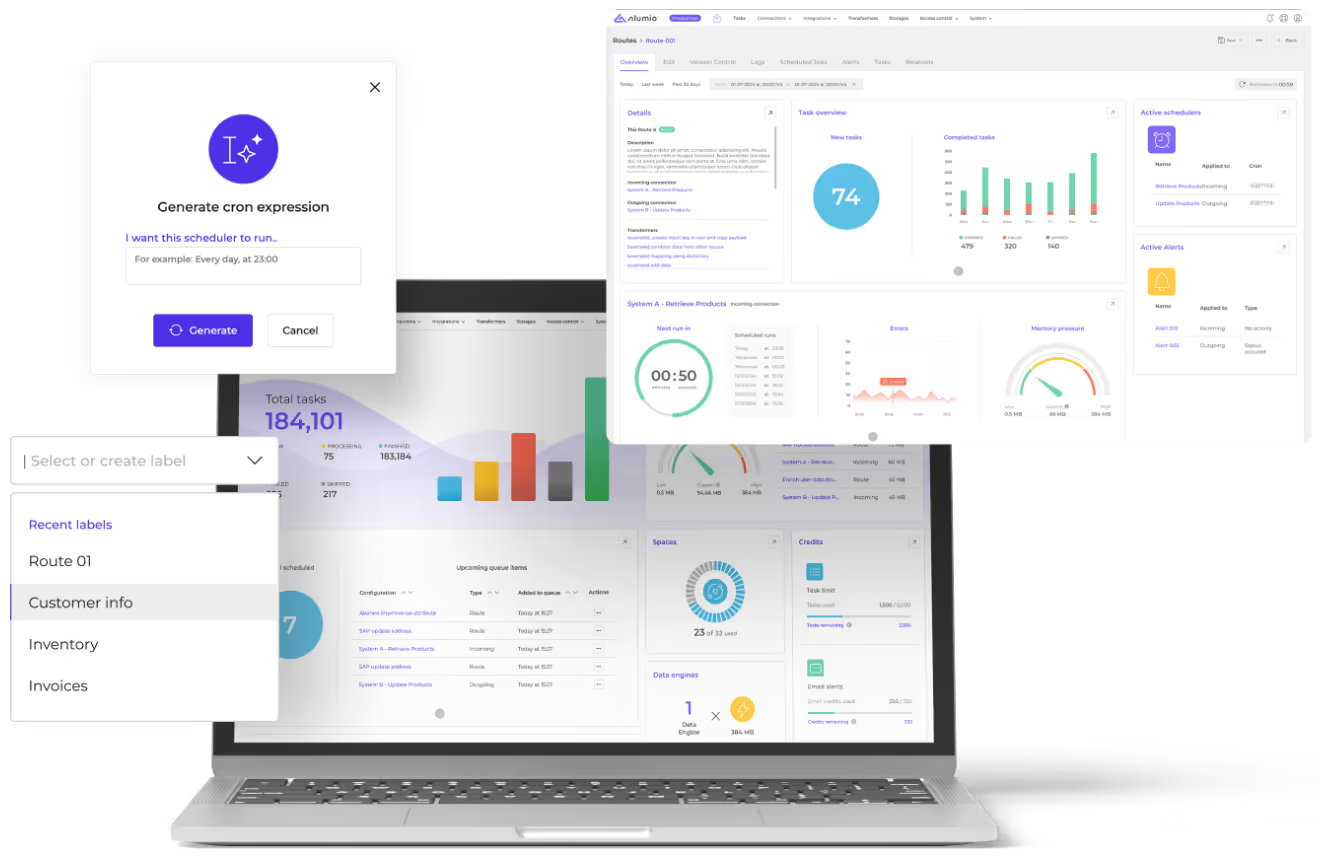
Laptop screen displaying the Alumio iPaaS dashboard, alongside pop-up windows for generating cron expressions, selecting labels and route overview.